How to store solar energy at home comes down to one thing. A battery. Solar panels make power in the day. Your home uses some. The rest goes into a battery. At night, that battery sends power back. Lights stay on. Fridge keeps running. No grid needed. Lithium-ion is the pick for most homes. It is small. It is safe.
It lasts for years. Prices are falling too. Ola's new home battery starts at 99,999. That is real the question is not hard anymore. It is a solved one.
How to Store Solar Energy in Battery?
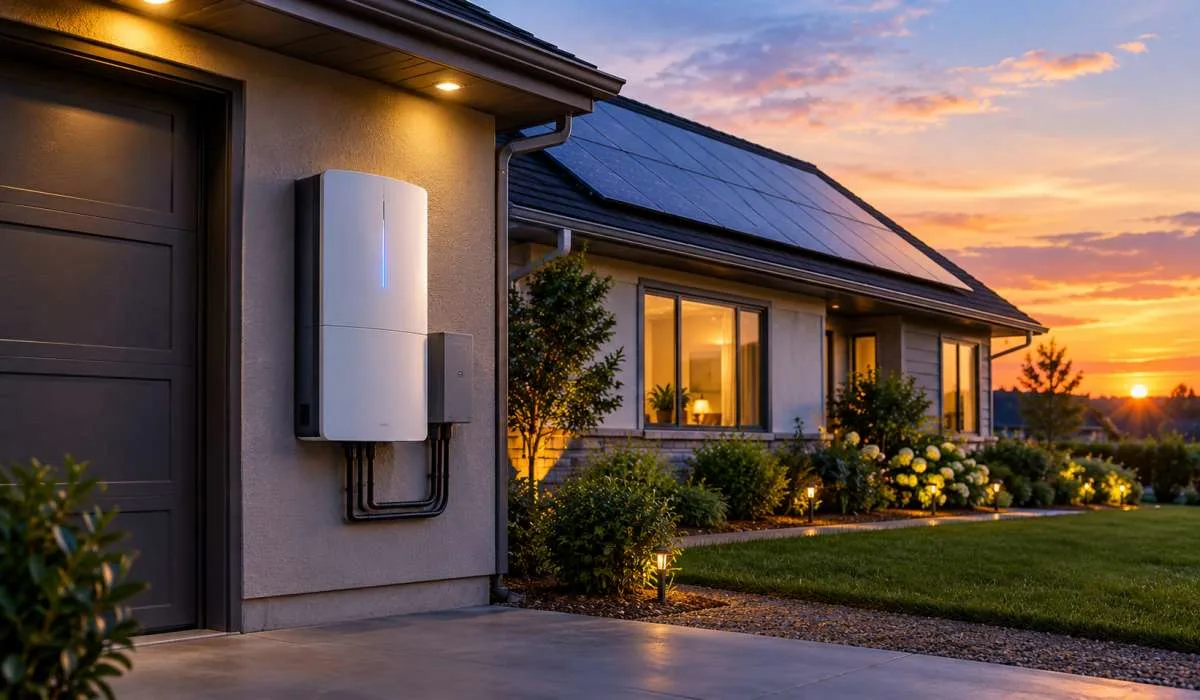
This is the system most homes use. Solar panels make DC power. An inverter turns it into AC power for your house. Any extra power goes into a battery. When the sun goes down, the battery sends power back through the inverter. Your lights stay on .
- The battery is usually lithium-ion. It is the same tech in your phone, just bigger. It sits on a wall. It works automatically. You do not touch it .
- Modern lithium batteries are good. They lose only 1.5 to 2 percent of charge per month. That is low. They hold power for a long time .
- Some systems can charge from the grid too. If power is cheap at night, the battery fills up. Then it uses that power in the evening when rates are high. This saves money .
- One thing to know. A standard battery will not power your home in a blackout. The system shuts off to protect line workers. You need a special backup design if you want power during an outage .
Read More: Latest Green Technology Innovations in 2026: Examples and Trends
Storing Solar Energy Without Batteries
Batteries are not the only way. There are other methods. They are mostly for large systems, but they work.
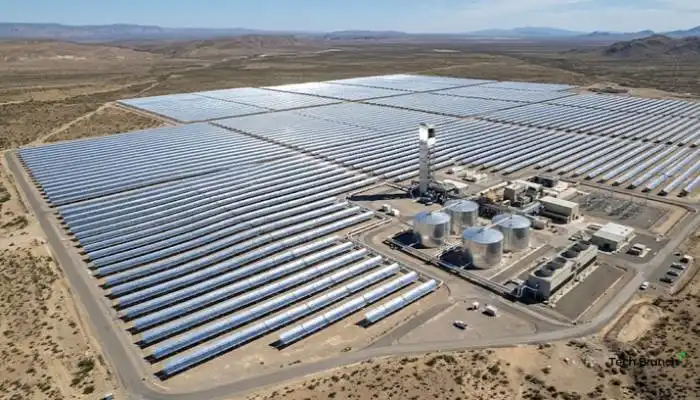
- Thermal storage uses heat. Concentrated solar power uses mirrors to focus sunlight. That heat goes into molten salt or another material. Later, the heat makes steam. The steam turns a turbine. This makes power after the sun is gone .
- Compressed air storage uses extra power to squeeze air into a tank or underground cavern. When you need power, the air is released. It spins a turbine. The catch is that the air cools down. It needs heat to work well. Old systems burned gas to heat it. New systems use solar heat instead. That makes it clean .
- Pumped hydro is the biggest storage method in the world. You pump water uphill when power is cheap. Let it flow down when you need power. It needs a hill and a lot of space. Not many homes can do this .
- Thermochemical storage is newer. It uses chemical reactions to store heat. It holds more energy in a smaller space. It is still in research .
For a normal house, these methods are not practical. They need space or special land. Batteries are the only real home option today.
Types of Solar Energy Storage Systems
Here are the main types you can buy.
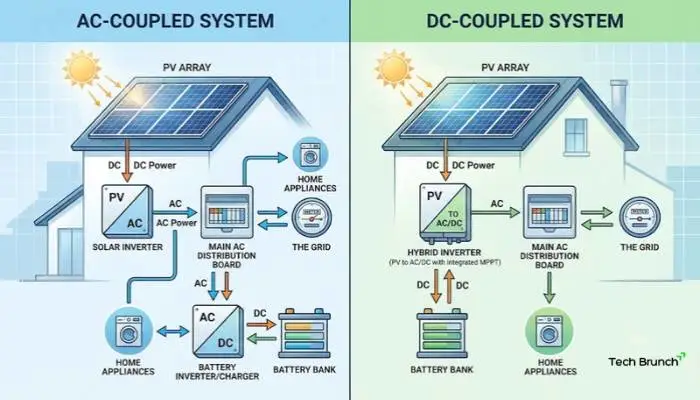
- AC-coupled battery. This is the easiest add-on. You already have solar panels and an inverter. You add a battery with its own inverter. It connects to your home's wiring. No need to replace your old gear .
- DC-coupled battery. This uses one hybrid inverter for both solar and battery. It is better for new setups. You get higher efficiency because power converts only once. It also lets the battery charge directly from the panels .
- Plug-in battery. These are small. They plug into a normal wall socket. They work with small solar setups, like a balcony panel. Capacity is small. Marstek makes one with 2 kWh. It uses LFP cells. It lasts about 6,000 cycles .
- All-in-one unit. Some brands put the battery and inverter in one box. Growatt makes one called NEXA 2000. It has a 10-year warranty. You can stack units to get more capacity .
Solar Panel Battery Storage for Home: What to Know
- Size matters. A 5 kWh battery is common. It can run a few lights, a fridge, and a TV for a few hours. It will not run your AC all night.
- Check the chemistry. Lithium iron phosphate (LFP) is safer and lasts longer than older lithium types. Look for 6,000 cycles or more .
- Look at the depth of discharge. This is how much of the battery you can use. 90 percent is good. That means you use almost all the stored power .
- Warranty is key. Look for 10 years on the battery. Some give 5. Push for 10 .
Think about your goals. If you want backup power, tell the installer. The system needs a special design. Not all batteries do backup .
You May Also Read: How Green Technology Helps the Environment and Our Future
Solar Energy Storage System Price
Prices are falling fast. That is good news.
- A home battery in India costs about 1.4 lakh for 5 kWh. That is the battery alone. A 3 kW solar system costs 87,000 after subsidy. Adding the battery takes the total to 2.27 lakh. Without a battery subsidy, payback is around 9 years. With a 50 percent battery subsidy, payback drops to 6.3 years .
- In the US, a home battery costs $10,000 to $18,000 installed. That is for a 10 kWh system. Prices vary by brand and installer.
- Utility-scale storage is much cheaper. Ember says it is $125 per kWh for big systems. That is why grid storage is growing so fast. Home storage costs more because of installation and small size .
The price trend is clear. Battery costs fell 40 percent in 2024 alone. They are still falling. Waiting a year might save you money. But you also lose a year of savings. Do the math for your own case .
The Bottom Line
Store solar at home with a lithium battery. That is the practical choice. AC-coupled is easy if you already have solar. DC-coupled is better for new builds. Plug-in units work for small setups. Thermal and compressed air are for big systems, not homes.
Prices are dropping. Subsidies help. Size the battery for your real needs. Tell the installer if you want backup power. And check the warranty. Ten years is the target.
FAQs
1. How to store solar energy at home?
Use a battery. That is the short answer. Panels make power in the day. Your home uses some. The extra goes into the battery. At night, the battery sends it back. Lights stay on. Fridge keeps running. Simple loop.
2. Can I store solar energy without batteries?
You can. But you lose the backup. Run heavy stuff at noon. Washing machine. EV charging. Water heater. Use the power as it is made. Send extra to the grid. Get a bill credit. That is net metering. But if the grid goes down, your panels shut off. No battery means no power in an outage.
3. What types of solar energy storage systems exist?
Lithium-ion is the one for homes. Same tech as your phone. Small. Wall-mounted. Lasts years. Pumped hydro ad compressed air are for power plants. Not garages. Flow batteries and saltwater batteries are for big projects. Stick with lithium-ion for a house.
4. How to store solar energy in battery?
The inverter turns panel power into usable AC. Your home takes what it needs. The rest goes to the battery. At night, the battery sends power back. The inverter flips it to AC again. A smart system runs it all. It charges and discharges on its own. You do not touch it.
5. What size battery do I need?
Look at your bill. Find your evening use in kWh. That is your number. A small battery is about 5 kWh. Runs lights, fridge, TV. No AC. A big one is 10 to 15 kWh. Covers most homes. Plan for the future too. An EV or heat pump needs more.
6. What is solar panel battery storage for home cost?
In India, Ola's 4.6 kWh battery is 99,999. The 9.2 kWh is 1,74,999. Introductory prices. Deliveries start late 2026. In the US, installed cost runs around $120 to $150 per kWh. Check local rebates. Check tax credits. They cut the price.
7. How long do home solar batteries last?
About ten years. Look at the cycles. A battery rated 6,000 cycles beats one rated 3,000. More cycles means more years. Check the warranty. Ten years is good. Keep it cool. Proper install matters. A bad install can start a fire. Get a pro.
8. Is a battery worth it?
Yes, if you want backup. The grid fails. Storms hit. Your lights stay on. That has value. It is not just money. It is peace of mind. Prices are dropping. Tech is improving. If you have solar, a battery makes it complete.