You have a startup. You need money to grow. But you do not know how funding works. You hear terms like seed round, Series A, and Series B. They sound confusing. This guide explains how startup funding rounds work in simple words. You will learn each stage.
You will see what investors look for. You will also learn how to get Series A funding. No complicated jargon Just clear information that helps you understand the process.
What Is a Funding Round?
A funding round is when a startup raises money from investors. In return, investors get ownership in the company. This is called equity financing . Unlike a loan, you do not pay back the money. Investors make money when your company grows and they sell their stake later.
Each round has a letter. Seed. Series A. Series B. Series C. The letter tells you which stage the company is at. A Series B round means it is the second major round after seed .
Read More: How Startups Get Seed Funding: A Practical Guide
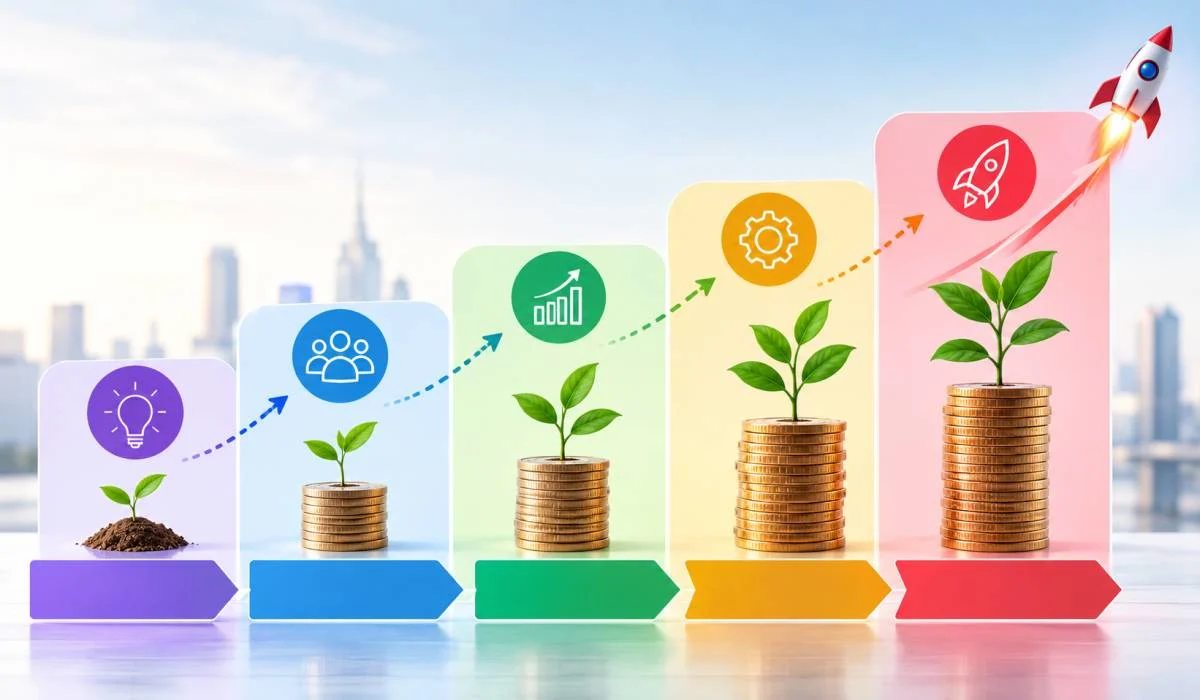
Startup Funding Stages: From Idea to Scale
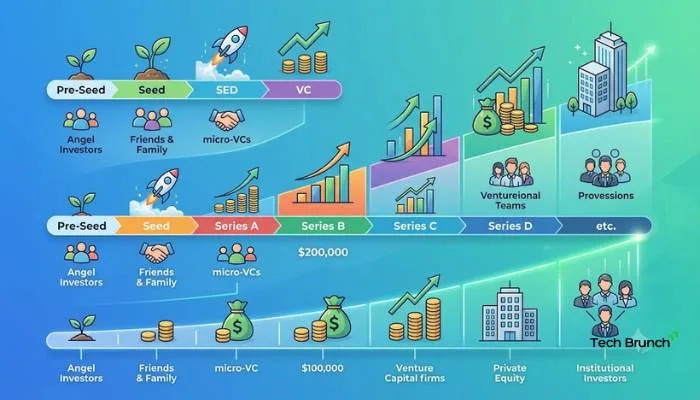
Here are the main funding stages. Each one has a different purpose.
Pre-Seed Funding
This is the earliest stage. You have an idea. Maybe a prototype. You need money to build the first version. The money usually comes from founders, family, and friends . Amounts are small. $25,000 to $100,000 .
Seed Funding
Seed funding is the first official equity round. It helps you build the product, hire a team, and find your first customers . Investors want to see proof that the problem is real. Early revenue or user traction helps . Seed rounds are usually $2 million to $3 million .
Series A Funding
Series A is the first institutional round. Venture capital firms lead these rounds. Investors want to see product-market fit. They want to see repeatable growth. This means your sales process works without the founder closing every deal . Series A is where many startups struggle. The bar is high.
Series B Funding
At Series B, the company has a track record. Revenue is growing. The business model works. Investors want to see signs of expansion. Can you enter new markets? Can you scale operations? This round funds rapid growth.
Series C Funding
Series C is for companies ready for major expansion. They may want to acquire competitors. They may want to enter international markets . These rounds are led by late-stage VC firms, private equity, and hedge funds . The company is often preparing for an IPO.
How to Get Series A Funding?
Series A is the hardest round for most startups. Here is what investors actually look for in 2026.
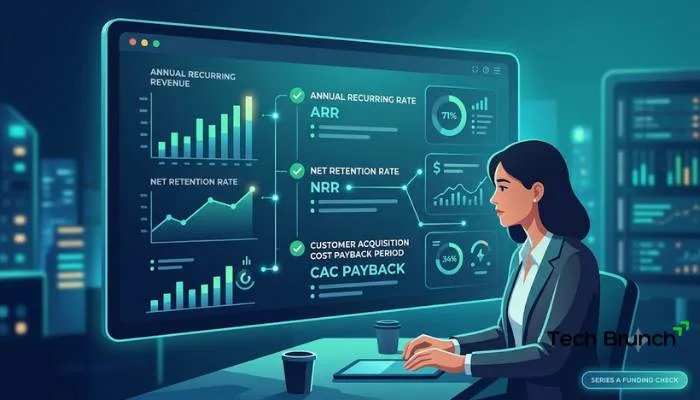
1. Annual Recurring Revenue (ARR)
For SaaS companies, the typical threshold is $1 million to $3 million in ARR . For AI and deep tech companies, it can be lower if the technology is strong .
2. Growth Rate
Investors want to see 2x to 3x year-over-year growth. 3x or more is strong . This shows the business is accelerating, not plateauing.
3. Net Revenue Retention (NRR)
NRR measures whether existing customers spend more over time. 110% is good. 120% or more is strong . This means your existing customer base is growing on its own.
4. CAC Payback Period
This measures how long it takes to recover the cost of acquiring a customer. Under 18 months is good for SaaS. Under 24 months for enterprise .
5. Sales Repeatability
Investors want to see that growth does not depend on the founder closing every deal. They look for at least 2-3 sales reps hitting quota. Or a documented sales playbook .
6. A Team That Can Scale
By Series A, you need key roles in place. Technical leadership. Sales leadership. The team should be able to grow without every decision going through the founder .
Funding Rounds Explained: What Changes at Each Stage
| Stage | Typical Amount | Who Invests | What They Want |
|---|---|---|---|
| Pre-Seed | $25K - $100K | Founders, friends, family | Founder-market fit |
| Seed | $2M - $3M | Angels, seed VCs | Proof of concept, early traction |
| Series A | $10M - $15M | Institutional VCs | Product-market fit, repeatable growth |
| Series B | $25M - $50M | VCs, growth funds | Scaling revenue, market expansion |
| Series C | $30M - $91M | Late-stage VCs, PE, hedge funds | Market leadership, path to IPO |
What Investors Need to Believe at Each Stage?
- At pre-seed, investors buy founder-market fit. They bet on you and your insight .
- At seed, they want evidence that the problem is real and your product can become a company .
- At Series A, the bar changes. Investors want repeatability. They want to see that acquisition, retention, and pricing are becoming a system .
This is why strong companies sometimes fail to raise Series A. The growth is real but not repeatable. Three enterprise contracts closed by the CEO personally is not a sales motion .
You May Also Read: Latest Tech Startup Acquisitions: Major AI Deals Reshaping 2026
The Fundraising Process
Fundraising is not one meeting. It is a process. Treat it like a sales campaign .
- Step 1: Build your materials. A clear deck. A simple financial model. A data room. Customer evidence .
- Step 2: Build your investor list. Tier 1: best-fit investors with relevant stage, sector, and check size. Tier 2: good-fit investors who may participate. Tier 3: strategic angels .
- Step 3: Run the process. Test your story with friendly investors first. Refine the deck. Launch outreach in waves .
- Step 4: Manage diligence. Pre-fill your data room. Assign owners for finance, legal, and tech. Answer within 24-48 hours .
- Step 5: Negotiate terms. Know your red lines. Valuation. Liquidation preference. Board seats. Pro rata rights .
Quick Summary Table
| Stage | Purpose | Key Metrics |
|---|---|---|
| Pre-Seed | Build first version | Founder-market fit |
| Seed | Build product, find customers | Proof of concept, early revenue |
| Series A | Scale go-to-market | $1M+ ARR, 2-3x growth, NRR 110%+ |
| Series B | Expand and grow fast | Revenue growth, market expansion |
| Series C | Market leadership, acquisitions | Predictable $50M+ ARR, path to IPO |
FAQs
1. What are the stages of startup funding?
Pre-seed, seed, Series A, Series B, Series C, and later rounds. Each stage has different investors, amounts, and expectations .
2. How much money can a startup raise at each stage?
Seed rounds are $2M-$3M. Series A is $10M-$15M. Series B is $25M-$50M. Series C is $30M-$91M . Amounts vary by sector and market conditions.
3. What do Series A investors look for?
They look for $1M+ ARR, 2-3x growth, NRR above 110%, CAC payback under 18 months, and sales repeatability .
4. How do I get Series A funding?
Build Series A metrics during your seed stage. Focus on repeatable growth, not just revenue. Have a team that can scale. Run a disciplined fundraising process .
5. What is the difference between seed and Series A?
Seed is about building and testing. Series A is about scaling a proven model. Seed investors bet on direction. Series A investors stress-test a growth thesis .
6. How long does it take to raise a round?
Seed rounds can close in 1-3 months. Series A often takes 3-6 months. It depends on your metrics and market conditions .
7. What is equity financing?
Equity financing means selling ownership stakes to investors. You do not repay the money. Investors profit when your company grows .
8. What happens after Series C?
Later rounds include Series D, E, and beyond. These fund pre-IPO growth or recovery from bad valuations. Fewer than 5% of startups reach Series D .