Starting a SaaS business feels overwhelming. You hear about billion-dollar companies and think you need millions in funding. That is not true anymore.
Today, solo founders are building profitable niche software businesses from their laptops. No team. No investors. Just a good idea and the will to execute . The secret is not building the next Facebook. It is finding one specific problem for one specific group and solving it well .
This guide covers the best SaaS startup ideas for beginners in 2026. We focus on ideas you can actually build as a solo founder or small team.
The Micro-SaaS Approach for Beginners
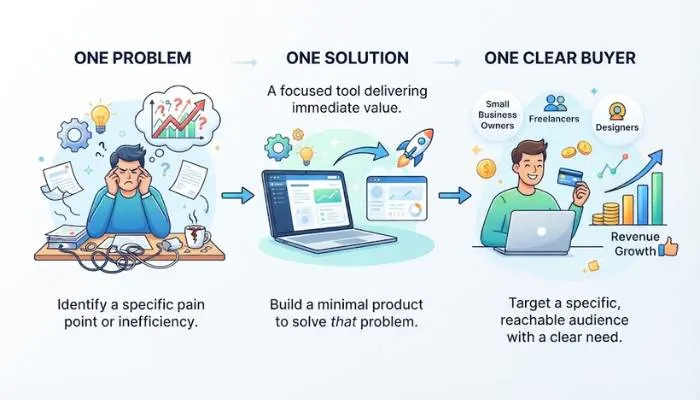
Micro-SaaS means building small, focused software products for tight-knit audiences . Think one problem, one solution, one clear buyer . These products are easier to build, maintain, and scale.
Micro-SaaS works for beginners because:
- You can build and test with minimal time and money
- You can often build using no-code or low-code tools
- You get recurring revenue without a big team
- You avoid competing with giants by staying niche
Read More: Profitable SaaS Startups in 2026: Who Is Making Money?
SaaS Ideas for Solopreneurs
These ideas are simple enough for one person to build and launch.
1. Automated Invoice Reminder for Freelancers
Freelancers chase late payments constantly. A simple tool that detects overdue invoices and sends friendly reminder emails solves a real pain point . It integrates with Stripe or PayPal and sends reminders at 3-day, 7-day, and 14-day intervals.
2. Client Intake and Onboarding Automation
Smart forms that collect project briefs, contracts, and assets from clients automatically . The forms adapt based on answers and trigger custom workflows. Target one industry and charge $97-$197 per month .
3. Social Proof Widget for E-Commerce
A plug-and-play widget that shows recent sales as a scrolling ticker on Shopify or WooCommerce stores . This boosts conversion rates. Charge $9 per month with a custom branding add-on for an extra $5.
4. AI-Powered Proposal Generator
Service providers spend 2-4 hours on proposals. An AI tool that turns a client brief into a complete proposal in 3 minutes . Service providers will pay $147 per month for this.
5. SaaS Boilerplates and Starter Kits
Package your preferred tech stack as a ready-to-go starting point . Authentication, payments, and deployment all pre-built. These sell for $49-$299 depending on what you include.
6. Note-Sharing App for Students
A simple platform for students to share study materials and collaborate . Focus on one university or one subject area first. Keep it simple and grow from there.
SaaS Ideas for Developers
If you can code, these ideas play to your strengths.
1. AI-Driven Code Debugging Assistant
A tool that analyzes stack traces, suggests fixes, and learns from your error patterns . Freemium model with usage-based pricing for teams.
2. SDK Code Generator from API Specs
Generate type-safe SDKs in multiple languages from OpenAPI specifications . Used by companies like Stripe to reduce integration friction. Strong recurring revenue potential.
3. Git Workflow Automation
Smart PR workflows, auto-labeling, and dependency tracking for development teams . Works especially well for monorepos and high-velocity teams.
4. Kubernetes Secrets Rotator
Automated secret rotation for Kubernetes with zero downtime and audit trails . Enterprise security teams will pay for this. Subscription model with a free tier for personal clusters.
5. Open-Source Dependency Audit Tool
License compliance and vulnerability scanning with an API-first design . Undercuts GitHub's offering. Privacy-conscious organizations are a key market.

Ideas for Non-Technical Founders
You do not need to code to start a SaaS. Use no-code tools.
1. Invoice Generator
Basic invoicing functionality for freelancers and small businesses . Customizable invoices with payment tracking and automated reminders. Integration with Stripe or PayPal handles payments.
2. Virtual Business Card Builder
Digital business cards with unique URLs for sharing . Professionals can customize designs and track who viewed their card. Sell subscriptions with premium templates.
3. Event Registration Page Builder
Landing pages for events and webinars . Custom registration forms, payment gateways, and automated email reminders. Add attendee management for premium tiers.
4. Freelancer Rate Benchmarking Tool
Real data on what freelancers in different niches charge . Freemium tier for freelancers, premium for agencies hiring contractors.
5. Freelance Expense Tracker
Log expenses, categorize automatically, and export tax-ready reports . Subscription model for self-employed professionals.
You May Also Read: 12 Best Startup Ideas with Low Investment in India
Trending SaaS Categories for 2026
These categories are seeing strong demand.
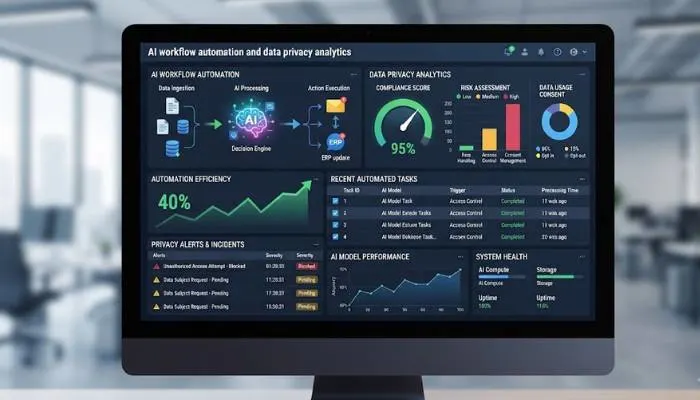
AI Workflow Automation
Automates daily business tasks across sales, HR, and operations . Companies pay for time saved, not features.
Vertical SaaS
Built for one specific industry like healthcare, legal, or education . Niche beats generic in 2026. The more specific, the better.
Cybersecurity for SMBs
Simple, affordable security dashboards . Small businesses want protection without complexity. There is a real gap in the market.
Data Privacy and Compliance Automation
GDPR, AI laws, and consent tracking . Regulation creates billion-dollar SaaS opportunities.
Subscription Management
Churn prediction, renewals, and pricing intelligence . Recurring revenue businesses need better control.
How to Find Your SaaS Idea?
Start with problems, not ideas . The best SaaS ideas come from inefficient workflows, frustrating tasks, and manual workarounds . Here is how to find them.
- Look at your own work. What is broken in your workflow? What do your peers complain about? What problems are people solving with spreadsheets and manual tasks?
- Check if there is demand. Search forums and communities. Look at existing tools. See if people are actively searching for solutions .
- Validate before building. Talk to potential users. Ask if they would pay for a solution. Create a landing page with a waitlist. Run small ads to test interest .
The Bottom Line
The best SaaS startup ideas for beginners are small, focused, and solve a specific problem. You do not need a big team or a lot of money. You need a clear problem and a simple solution.
Pick a niche. Validate your idea. Build a basic version. Get your first customer. Improve from there. That is how successful SaaS businesses start .
FAQs
1. What is the easiest SaaS idea to start?
Invoice reminder for freelancers. Late payments are a real pain. You can build it with no-code tools. Charge a small monthly fee. Simple to build and sell.
2. Can I build a SaaS without coding?
Yes. No-code tools like Bubble work well. Invoice apps, booking systems, and client forms are good examples. You only need code for advanced features.
3. How do I test if my idea is good?
Talk to people. Ask if they would pay for it. Create a simple landing page with a sign-up form. If people join the waitlist, build it. If not, try another idea.
4. How much money do I need to start?
Almost zero. Free tools are enough to start. Your time is the main cost. Get paying customers first, then reinvest. No investors needed for a micro-SaaS.
5. What is a micro-SaaS?
Small software for a specific group. One problem. One solution. One buyer. Easy to build and maintain. Steady income without a big team.