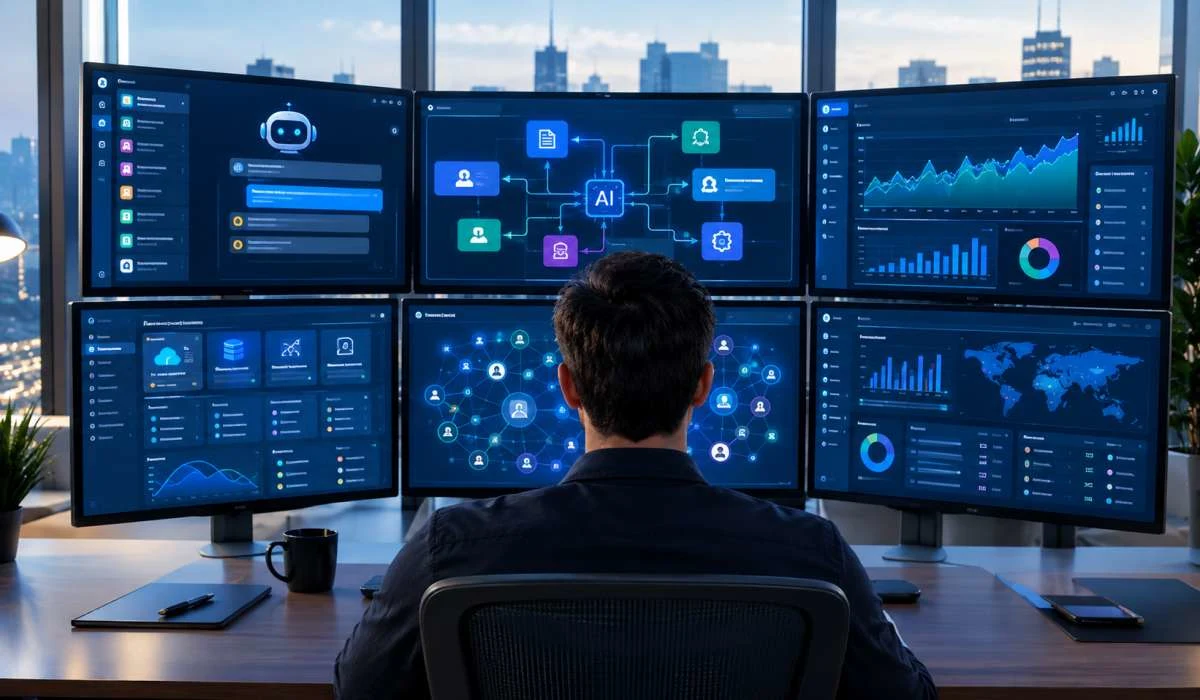
Enterprise technology is moving faster than ever. The trends this year are not just about new tools. They are about how companies build, secure, and run everything. AI is at the centre but it is not the only story. Enterprise technology trends in 2026 cover AI-native development, supercomputing, confidential computing, and multiagent systems.
They also cover physical AI, preemptive cybersecurity, and digital provenance. Security and governance are becoming urgent. Companies are moving workloads to regional clouds. The pace is fast. Gartner says 2026 is a pivotal year. Disruption and risk are expanding quickly. Organizations that act now will shape their industries. Those that wait may not catch up.
The Three Themes Driving 2026
Gartner groups this year's trends into three themes. They call them The Architect, The Synthesist, and The Vanguard .
- The Architect is about building foundations. Secure, scalable platforms for AI and digital transformation.
- The Synthesist is about combining technologies. Specialized models, agents, and physical-digital systems working together.
- The Vanguard is about protection. Security, trust, and governance as AI spreads everywhere.
Read More: Enterprise AI Tools for Business: Complete 2026 Guide
Top 10 Enterprise Technology Trends for 2026
1. AI-Native Development Platforms

These platforms use generative AI to build software faster. Small teams can now create applications that used to require large engineering groups. Gartner predicts that by 2030, 80% of organizations will evolve large software teams into smaller, AI-enhanced units .
The idea is "tiny teams" paired with AI. A team of two people can deliver an app that used to take a full squad. This changes how companies think about build versus buy.
2. AI Supercomputing Platforms
AI needs serious computing power. These platforms combine CPUs, GPUs, and specialized chips to handle massive workloads . They are used for model training, simulation, and analytics.
Healthcare companies model new drugs in weeks instead of years. Financial firms simulate global markets to reduce risk. Utility providers model extreme weather to optimize grids .
3. Confidential Computing
This protects data while it is being used. Normally, data is encrypted when stored and when moving. But during processing, it is exposed. Confidential computing uses hardware-based secure environments to keep data protected even during computation .
This matters for regulated industries. Banks, healthcare companies, and government agencies need to process sensitive data without exposing it to cloud providers.
4. Multiagent Systems
Multiagent systems are collections of AI agents that work together. Each agent handles a specific task. Together, they automate complex business processes .
Instead of one AI doing everything, you have specialized agents. One for customer service. One for inventory. One for scheduling. They coordinate to get work done.
5. Domain-Specific Language Models
Generic AI models are good at many things. But they often fail at specialized tasks. Domain-specific language models are trained on industry data. They deliver higher accuracy and better compliance .
Gartner predicts that by 2028, over half of the GenAI models used by enterprises will be domain-specific . A legal AI trained on law is better than a general AI trying to answer legal questions.
6. Physical AI
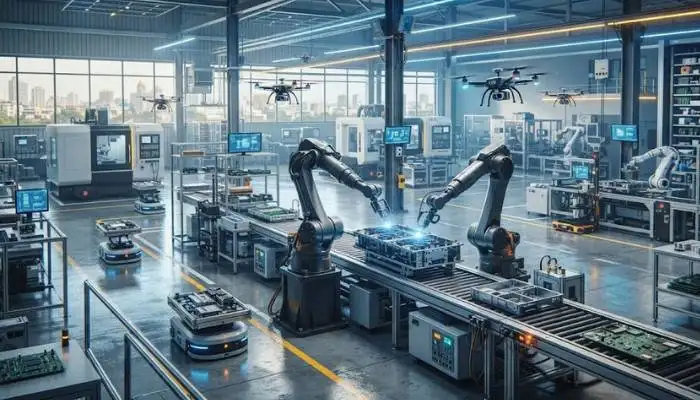
AI is moving from screens into the real world. Physical AI powers robots, drones, and smart equipment . It adds perception, reasoning, and action to machines.
This is arriving first in manufacturing and logistics. Dark factories run with no humans present. Vehicles make real-time decisions. Robots learn to navigate unpredictable environments .
7. Preemptive Cybersecurity
The old approach to security was reactive. Wait for an attack, then respond. Preemptive cybersecurity flips this. It uses AI to block threats before they strike .
The cyber defense window has compressed. More than three-quarters of vulnerabilities are now "zero day." By the time they are disclosed, exploits already exist . AI helps attackers and defenders at the same time. Preemptive defense is the only way to keep up.
8. Digital Provenance
Digital provenance verifies the origin and integrity of software, data, and AI-generated content . It answers questions like: Where did this come from? Has it been changed?
This is essential for trust. Companies use software bills of materials and digital watermarks to track assets. Gartner predicts that by 2029, organizations with poor digital provenance could face billions in sanctions .
9. AI Security Platforms
AI introduces new risks. Prompt injection. Data leakage. Rogue agent actions. AI security platforms provide a unified way to secure AI applications .
They centralize visibility, enforce usage policies, and protect against AI-specific threats. Gartner predicts over 50% of enterprises will use these platforms by 2028 .
10. Geopatriation
Geopatriation means moving workloads from global cloud providers to regional or national alternatives. It is driven by geopolitical risk and data sovereignty requirements .
Companies want more control over where their data lives. Gartner predicts that by 2030, over 75% of enterprises in Europe and the Middle East will repatriate workloads .
You May Also Read: Enterprise Cloud Migration Strategy: 2026 Practical Guide
What McKinsey Adds to the Picture?

McKinsey's Technology Trends Outlook 2026 highlights a few additional themes .
- Investment is surging. AI infrastructure and model architectures are on track to receive $769 billion in 2026. That is more than five times the 2025 level .
- Energy is a constraint. US data centers running AI workloads are projected to consume as much electricity by 2030 as California does today. More than 2,500 gigawatts of energy projects are stalled in grid queues worldwide .
- AI is generating breakthroughs faster than we can absorb. In biopharma, AI proposes thousands of drug candidates in the time it once took to generate a handful. But it cannot compress the years of clinical trials and regulatory review that follow .
The Bottom Line
Enterprise technology trends in 2026 are shaped by AI. Companies are building AI-native platforms, deploying multiagent systems, and moving AI into the physical world. At the same time, security and governance are becoming urgent. Preemptive cybersecurity, digital provenance, and AI security platforms are no longer optional.
The pace is fast. Gartner says 2026 is a pivotal year where disruption, innovation, and risk are expanding at unprecedented speed . Organizations that act now will shape their industries for decades. Those that wait may not catch up.
FAQs
1. What are the top enterprise technology trends for 2026?
AI-native development platforms, AI supercomputing, confidential computing, multiagent systems, domain-specific language models, physical AI, preemptive cybersecurity, digital provenance, AI security platforms, and geopatriation. These are the ten trends Gartner identifies for 2026.
2. What is AI-native development?
It means using generative AI to build software faster. Small teams paired with AI can deliver applications that used to require large engineering groups. Gartner predicts 80% of organizations will evolve large software teams into smaller, AI-enhanced units by 2030.
3. What is confidential computing?
It protects data while it is being used. Normally data is encrypted when stored and moving. But during processing, it is exposed. Confidential computing uses hardware-based secure environments to keep data protected even during computation. This matters for banks, healthcare, and government.
4. What are multiagent systems?
Collections of AI agents that work together. Each agent handles a specific task. Together they automate complex business processes. Instead of one AI doing everything, you have specialized agents that coordinate.
5. What is domain-specific language model?
A generic AI model trained on industry data. It delivers higher accuracy and better compliance than general models. Gartner predicts over half of GenAI models used by enterprises will be domain-specific by 2028.
6. What is physical AI?
AI that operates in the real world. It powers robots, drones, and smart equipment. It adds perception, reasoning, and action to machines. It is arriving first in manufacturing and logistics.
7. What is preemptive cybersecurity?
Security that blocks threats before they strike. The old approach was reactive. But most vulnerabilities are now zero-day. By the time they are disclosed, exploits already exist. AI helps attackers and defenders. Preemptive defense is the only way to keep up.
8. What is geopatriation?
Moving workloads from global cloud providers to regional or national alternatives. It is driven by geopolitical risk and data sovereignty. Gartner predicts over 75% of enterprises in Europe and the Middle East will repatriate workloads by 2030.