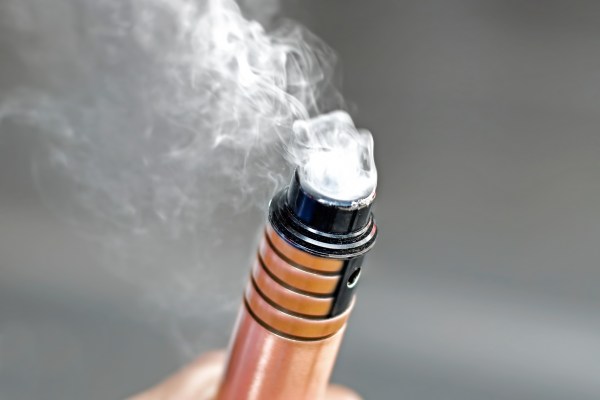
The threat of vape lung seems to have receded to the distant past now that we are all facing the coronavirus, but new research has shed light on the nature of that much more limited epidemic. It turns out vitamin E acetate, the vape fluid additive until now merely associated with lung damage, converts into a toxic chemical cocktail when heated.
That vitamin E acetate is not healthy to inhale is not a surprise; The chemical, which essentially had been used to dilute THC oil in cheap aftermarket vape cartridges, was associated in several studies cited by the CDC with lung damage. But at the time it was more correlative than causative information — the oil was found in the lung tissues of those suffering from vape lung, but there was no proven mechanism for harm.
Now work from researchers at the Royal College of Surgeons, in Dublin, has shown that vitamin E acetate’s effects are not limited to sticking around in the lungs and gumming up operations there. In a paper published in the Proceedings of the National Academy of Sciences, Dan Wu and Donal O’Shea write:
A combined analytical, theoretical, and experimental study has shown that the vaping of vitamin E acetate has the potential to produce exceptionally toxic ketene gas…
Additionally, the pyrolysis [i.e. heating] of vitamin E acetate also produces carcinogen alkenes and benzene for which the negative long-term medical effects are well recognized.
In other words, heating up vitamin E acetate, on its own or in a mixture, provably produces a number of toxic and carcinogenic compounds. Other studies would have to establish the potential pathology of those compounds interacting with the lungs, bloodstream, etc, but it’s safe to say that this substance is an extremely dangerous one to be burning and inhaling.
The obvious question of why it was put into cartridges in the first place is answered by the fact that vaping is a much lower cost alternative to cigarettes and many forms of cannabis. As vaping went downmarket a race to the bottom was all but assured and unscrupulous cartridge makers cut THC oils with substances that would produce no major changes in the immediate experience of taste, mouthfeel, and so on. Vitamin E acetate was one of those substances.
There are few regulations on this sector of commerce and frankly, even if there were, it would be trivial to avoid them. Besides, marijuana has a long history of existing outside of FDA approval. People are going to smoke whatever they want. But it seems clear now that there are plenty in the industry who have no problem putting others at risk of serious injury or death to sell more of their product.
It’s difficult to say which vape product providers were using vitamin E acetate, though it seems it was mostly THC cartridges on the low end, which make sense. There’s no need to dilute your product if people are already paying a healthy premium and you have a reputation as a high-end brand.
Exactly how testing and verification should be accomplished is a matter for the FDA, the vaping industry, and individual shops which may conduct their own checks to reassure customers. But the testing must be done — or else other unknown interactions or substances may still produce the sort of long term health effects we are trying to avoid.
As Wu and O’Shea write:
The potential for unexpected chemistries to take place on individual components within a vape mixture is high. Educational programs to inform of the danger are now required, as public perception has grown that vaping is not harmful.
Until it’s been tested, it’s still a risk.