A team of researchers from the West Virginia University (WVU) Rockefeller Neuroscience Institute (RNI), along with WVU’s Medicine department and staff from Oura Health have developed a platform they say can be used to anticipate the onset of COVID-19 symptoms in otherwise healthy people up to three days in advance. This can help with screening of pre-symptomatic individuals, the researchers suggest, enabling earlier testing and potentially reducing the exposure risk among frontline healthcare and essential workers.
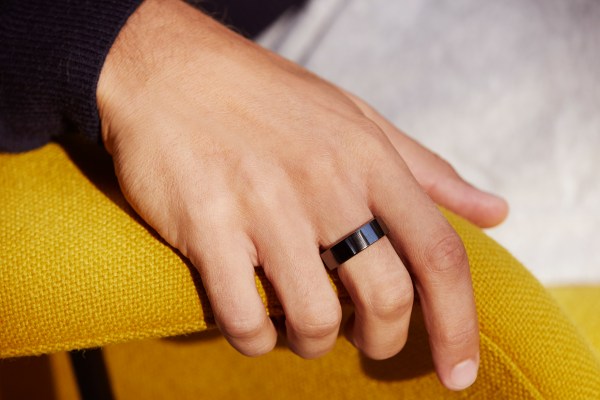
The sudsy involved using biometric data gathered by the Oura Ring, a consumer wearable that looks like a normal metallic ring, but that includes sensors to monitor a number of physiological metrics, including body temperature, sleep patterns, activity, heart rate and more. RNI and WVU Medical researchers combined this data with physiological, cognitive and behaviroral biometric info from around 600 healthcare workers and first responders.
Participants in the study wore the Oura Ring, and provided additional data that was then used to develop AI-based models to anticipate the onset of symptoms before they physically manifested. While these are early results from a phase one study, and yet to be peer-reviewed, the researchers say that their results showed a 90 percent accuracy rate on predicting the occurrence of symptoms including fever, coughing, difficulty breathing, fatigue and more, all of which could indicate that someone has contracted COVID-19. While that doesn’t mean that individuals have the disease, a flag from the platform could mean they seek testing up to three days before symptoms appear, which in turn would mean three fewer days potentially exposing others around them to infection.
Next up, the study hopes to expand to cover as many as 10,000 participants across a number of different institutions in multiple states, with other academic partners on board to support the expansion. The study was fully funded by the RNI and their supporters, with Oura joining strictly in a facilitating capacity and to assist with hardware for deployment.
Many projects have been undertaken to see whether predictive models could help anticipate COVID-19 onset prior to the expression of symptoms, or in individuals who present as mostly or entirely asymptomatic based on general observation. This early result from RNI suggests that it is indeed possible, and that hardware already available to the general public could play an important role in making it possible.