
When you own a business and need money, you hear two names come up a lot. Private equity. Venture capital. People mix them up all the time. But they are not the same. Private equity vs venture capital funding boils down to one thing. The age of your company.
Private equity buys old businesses that already make money. Venture capital puts cash into new companies that have not sold anything yet. The way these groups work is different too. PE takes full charge. VC buys a small piece and gives advice. If you know the difference between private equity vs venture capital funding, you will know which one fits your business.
What Is Private Equity?
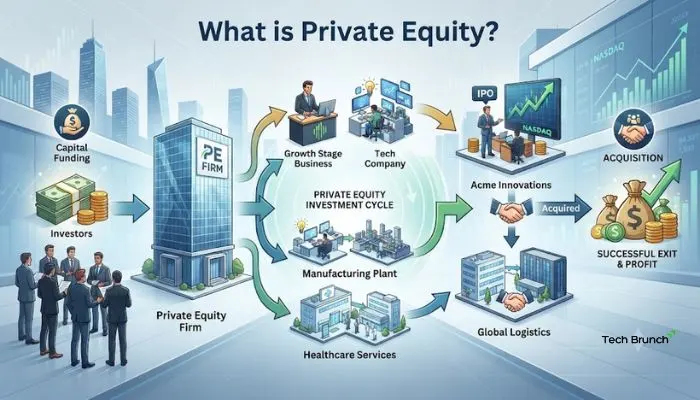
Private equity (PE) means investing money into a company that is not listed on the stock market. PE firms raise money from big investors like pension funds and wealthy individuals. They use this money to buy stakes in private companies .
But private equity firms do not invest in just any company. They usually target mature businesses that have been around for a while. These are companies that already make money, but they might have problems. They could be struggling, run inefficiently, or need a major change to grow. The PE firm buys a controlling stake, often 100% of the company . Then they step in to fix things. They might cut costs, replace the management team, or change the business strategy. The goal is to make the company more profitable and sell it for a higher price later .
Read More: Seed Funding vs Pre Seed Funding Differences: A Simple Indian Guide for Founders
What Is Venture Capital?
Venture capital (VC) is also an investment in a private company. But the target is completely different. VC firms invest in young companies and startups . They look for businesses with huge growth potential. These companies are often in tech, biotech, or other innovative fields. But at the time of investment, they might not even be making a profit. In fact, many have not made any money at all yet . The investment is a bet on the future.
Venture capitalists give money to help these startups develop their product, build a team, and grow fast. In return, they get a minority stake in the business. This means they own a piece of it, but the founders stay in control. VCs also often provide more than just cash. They give advice, mentorship, and connect the founders with important people in their industry . They hope the startup becomes hugely successful, goes public, or gets bought by a bigger company, giving them a big return on their investment.

Venture Capital vs Private Equity: Key Differences
While both are forms of private funding, there are several clear differences between private equity and venture capital. Here is how they compare in the most important areas.
Company Stage and Age
This is the biggest difference. Venture capital is for the start of the journey. VC firms invest in startups and early-stage companies. They come in when the business is just an idea or a prototype. As one expert puts it, "VC typically invests in early-stage companies, often start-ups that are in the initial phases of development" . On the other hand, private equity is for companies that have already found their footing. They invest in mature companies with a proven track record. These are established businesses that are often looking to grow, restructure, or enter new markets .
Investment Strategy and Control
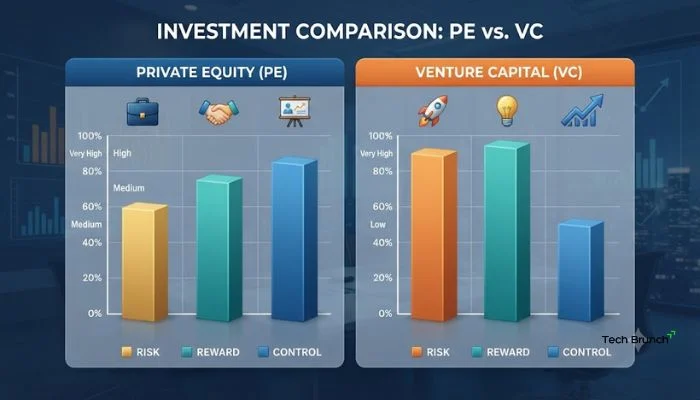
The way these investors approach a company is also different. VC firms take a minority stake. They want to help the founders, not replace them. They take a seat on the board and offer advice, but the founders still run the day-to-day operations .
Private equity is much more hands-on and controlling. PE firms usually want a majority or full control of the business. They are not just passive investors. They bring in new management, change operations, and make big decisions. Their strategy is to transform the company to maximize profit .
Investment Size
The amount of money invested in each deal is also very different. Venture capital deals are smaller. An early-stage VC investment might be between $500,000 and $10 million. Later rounds can get bigger, but they are still often less than $100 million . Private equity deals are massive. PE investments are often $100 million or more. A single deal can even be over $1 billion . This is because they are buying entire, established companies, which costs a lot more money.
Risk
Venture capital is a high-risk, high-reward game. Startups fail a lot. In fact, most of them do. A VC firm might invest in 20 startups, and 15 of them could fail completely. But if just one or two become the next Uber or Google, the returns can be huge enough to make up for all the losses .
Private equity is considered a lower-risk investment. The companies they buy already have revenue and customers. They are not betting on an idea; they are betting on a plan to make a good company even better. While there is still risk, the failures are not as common or as total as in VC. The returns are usually more steady and predictable .
Private Equity vs Venture Capital Funding in India
The private equity and venture capital scene in India has been growing fast. There have been some notable changes in recent years.
In 2025, total PE and VC investment in India fell to about $36 billion. But this was not all bad news. It was mostly because traditional private equity investments dropped by around 33%. They hit a slow patch due to high valuations and slower exits . The venture capital and growth investment side actually grew by about 18% .
One interesting trend is that the line between PE and VC is blurring in India. More and more PE firms are starting to act like VCs. They are investing in late-stage startups, which they might not have done before . This is happening for a few reasons. Many VC funds have less money to invest right now. Also, there is a wave of startup IPOs, and PE firms want to get in before the companies go public . For example, PE firms like Kedaara Capital, Investcorp, and TVS Capital are making these kinds of deals in India .
Another change is where the money is going. Investors are putting more capital into domestically focused sectors. Consumer and retail investments jumped, and manufacturing also saw a big rise. This is because of policy support and changes in global supply chains. Even with the dip in total value, deal activity went up by about 10% in 2025, meaning investors are still interested but are being more selective .
Venture Capital vs Private Equity Salary
If you are thinking about a career in finance, the pay is a big factor. There is a clear difference in compensation between these two fields, especially at the senior level.
Right now, private equity pays more than venture capital at almost every job level. For example, a mid-market PE associate had an average base salary of $145,000 in 2024, plus a big bonus. The same role in VC paid about 15% less . The big money, though, is in "carried interest." This is a share of the profits the fund makes. In PE, professionals often start getting carry after 3 or 4 years. In VC, it is much rarer for junior people to get it .
The lifestyle is also different. PE is known for very long hours, often 70-hour weeks, especially during big deals. VC has a more episodic intensity, but the hours are often less predictable . For 2025, reports show that compensation in both fields has been resilient, with PE pay expected to rise 4-6% annually, and VC maybe seeing bigger jumps at the top firms . The latest data for Europe shows Investment Partners' total cash compensation up by 6% on average .
You May Also Read: Best Seed Funding for Startups in India 2026 | SISFS Guide
Difference Between Venture Capital and Private Equity With Examples
The easiest way to understand the difference is with real-world examples. Let's look at a few.
Example 1: A Tech Startup
-
Company: A new company with a revolutionary app. They have a working product and some users, but they are not making any money yet.
-
Investor: A venture capital firm. The VC invests $5 million to help them hire more engineers and market the app. They get a 25% stake in the company. The VC also helps the founders by introducing them to potential business partners. The founders still own most of the company.
-
Goal: For the app to become a huge success and either go public or be bought by a big tech company like Google or Apple.
Example 2: A Mature Company
-
Company: A mid-sized manufacturing company that has been around for 40 years. They are making a profit, but they are not growing. Their equipment is old, and their management is set in its ways.
-
Investor: A private equity firm. The PE firm buys 100% of the company for $500 million. They bring in a new CEO and start modernizing the factories. They sell off parts of the business that are not profitable.
-
Goal: To make the company more profitable and efficient over the next 5 years, then sell it to another company for $800 million.
Example 3: A Late-Stage Company in India
-
Company: Wakefit, an Indian mattress and furniture company. By early 2023, they had grown to over 800 crore rupees in revenue and had over 50 stores around India. They were close to being profitable.
-
Investor: Investcorp, a PE firm, invested $40 million in Wakefit. This came five years after a VC firm, Peak XV Partners, made an earlier investment when Wakefit was in a much riskier, earlier stage.
-
Goal: For Wakefit to use the money to get to an IPO in the next couple of years, allowing the investors to exit and make a profit .
Conclusion
Private equity and venture capital are both important ways to fund companies, but they serve very different purposes. Venture capital is the fuel for the future. It helps young, risky startups get off the ground and chase huge dreams. Private equity is the engine for improvement. It helps established companies reach their full potential by making them more efficient and profitable.
If you are an entrepreneur with a new idea, you will likely look for venture capital. If you own a mature business that is ready for a major change, or you are looking to sell, private equity is the player you will talk to. Understanding this difference is the first step to deciding which path is right for your company.
FAQs
Here are answers to the five most common questions. Each one gives you the facts without extra words.
1. What sets private equity apart from venture capital?
Private equity buys old companies that have been around for years. These companies already make money. Venture capital puts money into brand new companies that have not sold anything yet. PE takes over the whole business. VC buys a small piece and steps back.
2. Which career brings in more money?
Private equity wins on pay. A PE associate makes about 15% more than a VC associate. The gap gets wider as you move up. PE gives profit shares to its people after three or four years. VC holds onto that for senior partners only.
3. Which one has more chance of losing money?
Venture capital has the higher failure rate. Most new businesses close down within a few years. A VC fund might put money into twenty startups. Fifteen of them could go under. But two or three might grow so big that they pay for all the losses. PE deals do not fail as often because the companies already have steady income.
4. Do companies ever take both kinds of money?
Yes. It happens all the time. A company takes VC money when it is small and needs to build its first product. After ten or fifteen years, when it is big and profitable, a PE firm might buy it. The VC gets paid back. The PE takes over to push the company further.
5. Which one should a business owner pick?
Look at your company age. If you just started and need cash to build something new, go with venture capital. If your business has been running for years and you want someone to buy it or fix it up, private equity is your answer.