
If you have a startup idea or you already started your own business, one big question comes in your mind. That question is how to get funding for startup from government. You need money to grow your business. You need money to buy raw material, to pay your team, to market your product.
Many people think funding only comes from rich people or big companies. But that is not true. In India, the government wants new businesses to grow. The government wants young people to become job creators. That is why the government started many schemes.
These schemes give money to startups. This money is not a loan always. Sometimes it is a grant. Sometimes it is a loan with very low interest. Sometimes the government gives you money and takes a small part of your company.
Why government gives funding to startups?
Before we go into how to get funding, you must know why government gives this money. The government knows that new businesses create new jobs. When you start a business, you hire people. Those people pay tax. That tax helps the government build roads, schools, hospitals. Also, when Indian startups grow, they bring new technology.
They solve Indian problems. They make India strong in the world. So the government made a big plan called Startup India. Under this plan, many funding schemes were made.
The government wants to give you money so that you do not shut down your startup because of lack of money. This is not a favor. This is a policy. So you must take benefit of it.
Read More: Top Funded Startups in Bangalore This Year: IT Jobs for Freshers 2026
Who can get government funding for startup?
You cannot just wake up one day and ask for money. You must fit some rules. These rules are simple.
Step 1: Your Company Must Have a Valid Business Structure
Your company must be one of the following:
- A Private Limited Company
- A Partnership Firm
- A Limited Liability Partnership (LLP)
Only these business structures are eligible for government startup funding.
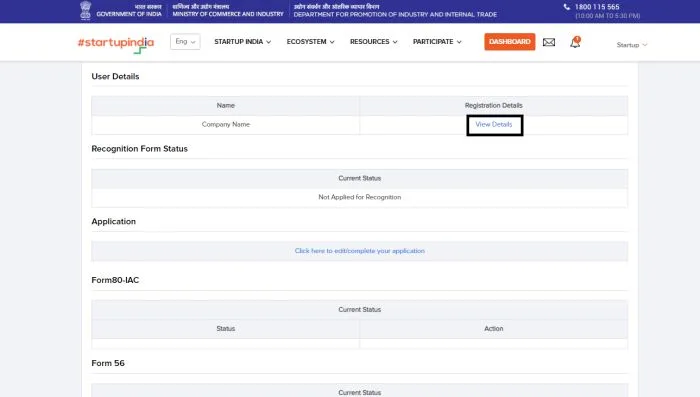
Step 2: Get DPIIT Registration
Your company must be registered with the government under DPIIT.
DPIIT stands for Department for Promotion of Industry and Internal Trade.
The registration process is very simple and completely online:
- Go to the Startup India website.
- Fill out the registration form.
- Upload your incorporation certificate and pitch deck.
- Submit the application.
Usually, within two days, you receive your DPIIT recognition certificate.
Step 3: Your Company Should Be Less Than 10 Years Old
- Your startup must be less than ten years old from the date of incorporation.
- If your company is older than ten years, you cannot get government startup funding.
Step 4: Your Annual Turnover Must Be Below 100 Crore
- Your company’s yearly turnover should be less than one hundred crore rupees.
- If your turnover is more than 100 crore, the government does not consider your business a startup.
Step 5: Your Business Must Be Innovative
- Your company must be working on something new or innovative.
- You cannot simply open a regular shop and ask for funding.
Your product or service should:
Solve a real problem or Improve an existing system, product, or service Innovation is one of the most important requirements for government startup funding. If your startup fits all these rules, then you are ready to learn how to get funding for a startup from the government.
How to raise funds for startup business in India – the real steps
Many people think raising funds is very hard. They think you need big connections. But for government funding, you only need a good application and patience. Let me tell you the real steps.
- First step, you need a solid business plan. Write down what problem you are solving. Write down who will buy from you. Write down how much money you need and for what. Write down how you will give return to the government if they give you equity.
- Second step, you must have a bank account in your company name. Do not use personal account.
- Third step, you must have a Udyam Registration if you are a small business. It is free and easy.
- Fourth step, you go to the government portal. There is a single portal called the National Single Window System. On this portal, you can see all government schemes for startups. You can apply to many schemes from one place.
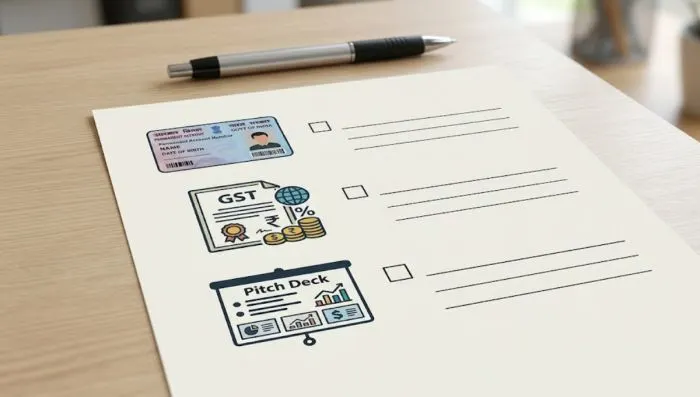
- Fifth step, you prepare your documents. You need your DPIIT certificate, your company PAN, your GST number if you have, your bank statement, your business plan, and your pitch deck.
- Sixth step, you apply to the scheme that fits your need. Do not apply to all schemes. Apply only to those where your business type matches.
- Seventh step, you wait. Government takes time. Usually one to three months. Sometimes you will get a call for presentation.
You will have to present your idea to a committee. Prepare well. If your idea is good, they will give you money.
This is the general approach. However, you also need to understand the exact schemes in detail. I will now explain the top 10 government schemes for startups in India.
Each scheme is different in its structure and support system. Some schemes provide financial assistance in the form of grants, some offer loans, and some provide equity funding for startups.
Top 10 government schemes for startups in India
1. Startup India Seed Fund Scheme
This is the most famous scheme. Under this scheme, the government gives you seed money. Seed money means money for the very beginning of your startup. You can get up to twenty lakh rupees as grant. Out of this, five lakh is given as grant. Grant means you do not have to return it. The remaining fifteen lakh is given as a loan with vry low interest.
You use this money to make your prototype, to do testing, to do market research, and to start your first sales. To get this money, you must have a DPIIT registered startup. You also must have a proof of concept. That means you must have shown that your idea works at a small level. You apply through an incubator. Incubator is a place that helps startups. Government has approved many incubators in different cities. Find an incubator near you. They will help you apply.
2. Credit Guarantee Scheme for Startups (CGSS)
Many startups cannot get loan from bank because bank asks for guarantee. You need to give something as security. But what if you have nothing? Then this scheme helps you. Under CGSS, the government gives guarantee to the bank.
That means if you do not return the loan, the government will pay the bank. Because of this guarantee, bank gives you loan without asking for any security. You can get loan up to twenty crore rupees. The interest rate is normal but because of government guarantee, the bank may give you lower rate. You must have DPIIT registration. Your loan must be for business purpose.
You apply directly to any bank that is part of this scheme. Most public sector banks like SBI, Bank of Baroda, Canara Bank are part of this scheme.
3. Fund of Funds for Startups (FFS)
This is a big scheme. Under this scheme, the government has put ten thousand crore rupees in a fund. This fund is managed by SIDBI. SIDBI is Small Industries Development Bank of India. The government does not give money directly to you. Instead, the government gives money to other funds.
Those funds are called Alternative Investment Funds or AIFs. Those AIFs then invest in startups. So if you want money from this scheme, you have to go to these AIFs. They will take a small part of your company and give you money.
The amount can be from one crore to fifty crore rupees. To qualify, you must be a DPIIT registered startup. You must have a good business model. You must show that you can grow fast.
4. NIDHI – National Initiative for Developing and Harnessing Innovations
This scheme is for startups that are very new. If you have an idea but you have not made any product yet, this scheme helps you. Under NIDHI, there are many parts. One part is NIDHI Prayas. It gives you up to ten lakh rupees to make your prototype. Another part is NIDHI Accelerator.
It gives you up to fifty lakh rupees and also gives you office space and mentorship. To get NIDHI funding, you must be connected to a Technology Business Incubator. These incubators are in IITs, NITs, and other good colleges. You can find the list on the NIDHI website.
5. MAARG – Mentor Advisory and Assistance for Rising Startups
This scheme is a little different. It does not directly give you money. But it gives you a mentor. A mentor is an experienced person who has built a business before. This mentor helps you to fix your business plan. When your business plan becomes strong, then you can apply for money.
Many startups fail because they do not have guidance. So MAARG solves that problem. You register on the MAARG portal. The government assigns a mentor to you. The mentor talks to you every week. After three months, if your plan is good, the mentor will help you connect to investors and government schemes. This is a very useful scheme for first time founders.
6. Biotechnology Ignition Grant (BIG)
If your startup is in the field of biology, medicine, health, or farming, then this scheme is for you. The Biotechnology Industry Research Assistance Council gives this grant. You can get up to fifty lakh rupees.
This is a grant. You do not have to return it. You use this money to prove that your science idea works. You need to have a team that includes a science person. You can apply online on the BIRAC website.
They have three cycles every year. The application is simple. You write a short proposal. If they like your idea, they will give you the grant.
7. MeitY Startup Hub – Genesis
MeitY is the Ministry of Electronics and Information Technology. They run a scheme called Genesis. This scheme is for startups in software, hardware, artificial intelligence, cyber security, and electronics.
Under Genesis, you can get up to fifty lakh rupees as grant. You also get a chance to work with the government on their projects.
This means you get a customer as well as money. To apply, you must have a working prototype. You must have a team of at least two people. You apply on the MeitY Startup Hub portal. They select startups every six months.
8. State Government Startup Schemes – example of Tamil Nadu and Kerala
Every state in India has its own schemes. I will give you two examples so you understand. In Tamil Nadu, there is a scheme called Tamil Nadu Startup and Innovation Mission. Under this, you can get up to fifteen lakh rupees as grant. You also get free office space for one year. In Kerala, there is Kerala Startup Mission.
They give you up to ten lakh rupees as seed fund. They also give you a stipend of twenty five thousand rupees per month for one year. You must search for your state's startup scheme. Just search on Google "your state name startup policy" and you will find it.
9. SAMRIDH Scheme
SAMRIDH stands for Startup Accelerator of MeitY for Product Innovation, Development, and Growth. This scheme gives you money through an accelerator. Accelerator is like a program of three to six months.
In that program, they teach you how to sell your product, how to get customers, and how to raise more money. Under SAMRIDH, you can get up to forty lakh rupees. Out of this, some is grant and some is loan. You apply through an accelerator that is approved by MeitY.
10. ASPIRE – A Scheme for Promotion of Innovation, Rural Industry and Entrepreneurship
This scheme is for startups in rural areas. If your business is in a village or small town, you can get help. Under ASPIRE, the government sets up Livelihood Business Incubators. You can join one of these incubators. They give you space, machines, and small money up to five lakh rupees.
They also help you sell your product in nearby cities. To get this, you must go to your nearest ASPIRE center. There are more than one hundred centers in India. You can find the list on the ASPIRE website.
You May Read Also: Bootstrapping vs VC Funding Startups: Pros, Cons, Real Guide

How to choose the right scheme?
You cannot apply to every scheme. That is a waste of time. You must choose the scheme that fits your startup. Ask yourself these questions.
- First, what stage is my startup? If you only have an idea, go for NIDHI Prayas or BIG. If you have a small working product, go for Startup India Seed Fund.
- Second, how much money do you need? If you need less than twenty lakh, go for seed fund schemes. If you need more than one crore, go for Fund of Funds or CGSS.
- Third, what is your business type? If you are in biotechnology, go for BIG. If you are in electronics, go for Genesis.
- Fourth, do you want grant or loan? Grant is free money but amount is small. Loan is bigger but you have to return. Choose based on your need.
Common mistakes when applying for government funding
Many people apply but they do not get money. Why does this happen? I will tell you the common mistakes.
- First mistake, they do not read the rules properly. Every scheme has a document called guidelines. You must read that document fully. The document tells you what documents to upload, what format to use, and what date is the last date.
- Second mistake, they write a weak business plan. Your business plan must be clear. Do not write big words. Write simple sentences. Tell exactly what you will do with the money.
- Third mistake, they do not follow up. After applying, you must call or email every fifteen days. Ask politely if your application is moving.
- Fourth mistake, they apply to schemes that are closed. Always check the last date. Many schemes open only for thirty days. If you miss it, you have to wait for next cycle.
- Fifth mistake, they do not take help from incubators. Incubators are free for government scheme applications. They know the process.
They will check your application before you send it. So always talk to an incubator.
Step by step process to apply without confusion
Let me give you a very simple step by step. Follow this exactly.
- Step one – Go to the Startup India website. Create an account. Complete your profile.
- Step two – Apply for DPIIT recognition. Upload your incorporation certificate, your PAN, your director details, and your pitch deck. Get the recognition certificate. This takes two to three days.
- Step three – After you get DPIIT recognition, go to the National Single Window System portal. This portal has all government schemes for startups.
- Step four – In the portal, filter schemes by your state, your business type, and your funding need. Make a list of three to four schemes that fit you.
- Step five – For each scheme, download the guidelines PDF. Read it fully. Note down the last date, the documents needed, and the application fee if any. Most government schemes have no fee.
- Step six – Prepare your documents. Keep them in one folder on your computer. Name the files clearly like "business_plan.pdf" and "company_pan.pdf".
- Step seven – Fill the application form online. Write your answers in simple language. Do not copy from internet. Write in your own words. Answer each question fully. Do not leave any field empty.
- Step eight – Upload all documents. Double check that you uploaded the correct file.
- Step nine – Submit the application. Take a screenshot of the submission confirmation. Save the application number.
- Step ten – After fifteen days, call the helpline number given in the guidelines. Give your application number. Ask for status. Do this every fifteen days until you get a response.
- Step eleven – If you are called for presentation, prepare a ten slide presentation. First slide – problem. Second slide – your solution. Third slide – how it works. Fourth slide – market size. Fifth slide – your team. Sixth slide – how much money you need. Seventh slide – how you will use the money. Eighth slide – what you have achieved so far. Ninth slide – future plan. Tenth slide – thank you. Practice this presentation five times before you go.
- Step twelve – If you get approval, sign the agreement. The money will come to your company bank account within thirty days.
How to write a business plan for government funding?
Your business plan is the most important document. If your business plan is weak, you will not get money. So let me teach you how to write a good business plan. Use simple language. Do not use fancy words. Write in paragraphs. Do not write one line answers. Write full sentences.
- First page – write your company name, your name, your phone number, your email.
- Second page – write what problem you are solving. Give an example. Say "In my village, farmers cannot find good price for their vegetables. My app connects farmers directly to city buyers."
- Third page – write your solution. Explain your product.
- Fourth page – write who will buy from you. Give a number. Say "There are ten thousand farmers in my district. If I get five hundred customers in first year, I will make ten lakh rupees."
- Fifth page – write your team. Who is doing what.
- Sixth page – write how much money you need. Give a breakup. Say "Three lakh for software development, two lakh for marketing, one lakh for legal and registration."
- Seventh page – write how you will return the money or give value. If it is grant, write how many people will get employment.
If it is equity, write what percentage you are giving. Keep the total business plan between ten to fifteen pages. Do not make it very long.
What to do if your application is rejected?
Do not lose hope. Rejection is common. Even big startups got rejected many times. If your application is rejected, first ask for the reason. Call the helpline or send an email. Ask "What was the reason my application was not selected?" Most of the time, they will tell you.
Maybe your business plan was not clear. Maybe your numbers were wrong. Fix those things. Then apply again in the next cycle. Many schemes have two or three cycles every year. Also apply to other schemes. Do not put all hope on one scheme.
Real example of a startup that got government funding
Let me give you a real example. There is a startup called String Bio. They work on making animal feed from methane gas. They applied to the Biotechnology Ignition Grant. They got fifty lakh rupees as grant. With that money, they made a small factory. Then they went to Fund of Funds and got more money. Today they are a successful company. Another example is a startup from Pune called Repos Energy. They make mobile fuel tanks on trucks. They got funding from Startup India Seed Fund. Then they got loan from bank under CGSS. Today they are in many cities. So government funding works. You just need to apply properly.
Final words
Getting funding from government is not difficult. It only needs patience and correct process. Many Indian founders do not apply because they think it is hard. That is a mistake. Government has kept money for you. You just have to ask. Follow the steps I gave you.
Register your startup on DPIIT. Find the right scheme. Write a simple business plan. Apply on the single window portal. Follow up every fifteen days. Prepare for presentation. If you do these things, you will get the money. And remember, this money can change your startup. It can help you hire your first employee.
It can help you make your first product. It can help you get your first customer. Do not wait. Start today. Go to the Startup India website and create your account. Your journey of how to get funding for startup from government starts now. Good luck.
FAQs
Can a one person company get government funding?
Yes. If you are a single person and you have a one person company registered, you can apply. But you must have DPIIT recognition. Some schemes ask for two directors. So check the guidelines.
Is there any fee to apply?
No. Government schemes for startups do not take any application fee. If someone asks you to pay money to apply, that is a scam. Do not pay.
How long does it take to get the money?
After approval, usually thirty days. But from application to approval, it can take three to six months. So apply early. Do not wait until you have no money left.
Can a student apply for government funding?
Yes. If you are a student and you have a registered company, you can apply. Many students in IITs and NITs have gotten NIDHI grants. You must be eighteen years or older.
Do I have to give back the grant?
No. Grant is free money. You do not give it back. But you must use it for the purpose you said. If you misuse the money, government can take legal action.
Can I apply for two schemes at the same time?
Yes. You can apply to two or three schemes at the same time. But you cannot take money from two schemes for the same purpose. If you get money from one scheme, you must tell the other scheme that you already got money