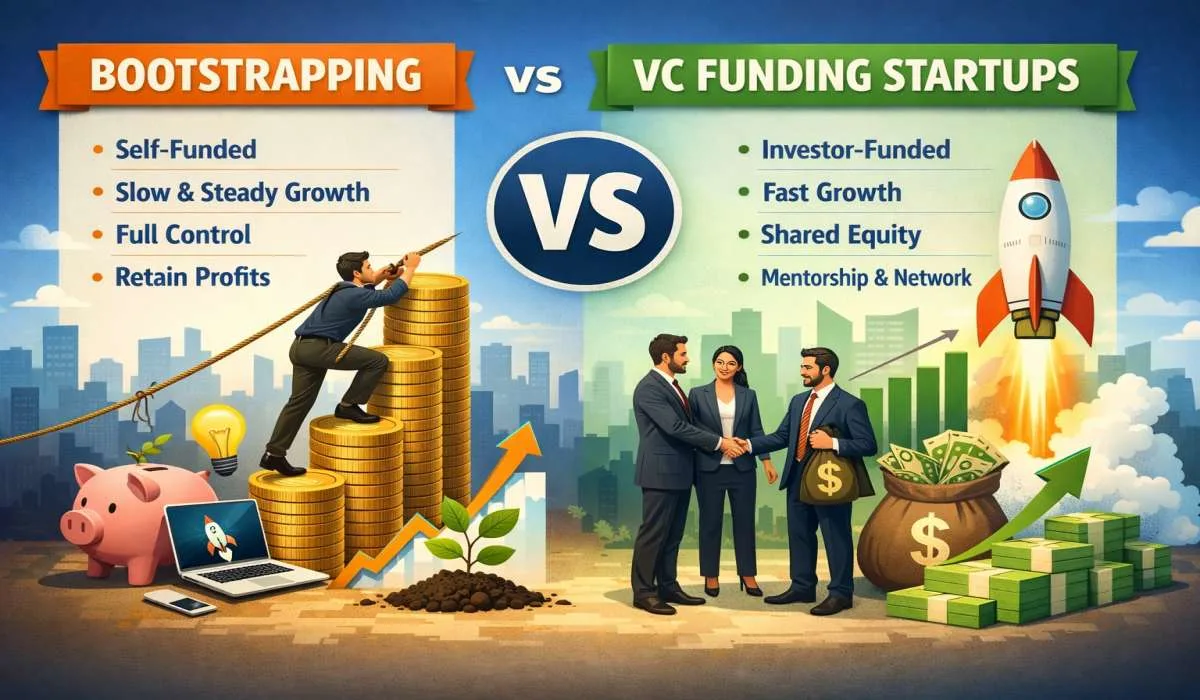
Bootstrapping vs VC funding startups offers founders two clear paths to build their dream business. Founders hit a fork in the road early: sink their own dollars plus first checks from buyers to grow steady, or snag VC bucks to rocket ahead. Bootstrapping hands you total say-so, swapping earnings for every next step without slicing up ownership, even if it crawls in cutthroat spaces.
VC unleashes cash rivers, links to brainy mentors and prime hires, yet pulls in oversight sessions plus a countdown to cash-out day. Numbers say 86% of startups launch self-paid, Mailchimp banking buyer cash to climb high, Uber torching investor piles to claim streets everywhere. Line it up with your bank balance, how quick your game shifts, whether full grip eases your mind more than splitting wins lots fuse both once the spark catches fire.
What Bootstrapping Means?
Bootstrapping happens when you start and run your company using personal savings, early customer payments, or small loans from people you know. No big outside investors join the picture. You build step by step as revenue comes in.
This approach keeps things simple at first. Many founders start this way because it tests if customers want the product before spending too much. You learn fast from real sales, not just plans. Over time, profits fund hires and new features. It forces smart choices on costs since every dollar counts.
Take Mailchimp as one example. The team behind the email tool grew it for years on customer fees alone. They hit huge success without giving up shares early. This shows how focus on steady sales pays off in the long run.
Read More: How to Disable Startup Programs on Windows and Mac

What VC Funding Means?
Venture capital brings outside money from investors who trade cash for a piece of your startup. They look for businesses ready to grow fast and promise big returns down the line. This path gives you fuel to hire teams, run ads, and grab market share before others catch up.
Investors often come from firms that manage billions. They review your pitch, check your numbers, and decide if your plan fits their goals. Once in, they join your board and offer advice from past deals. Funds arrive in rounds—seed for early tests, then Series A for scale, and more as you hit targets.
This setup speeds everything up. You skip years of slow sales to build at full throttle. Connections open doors to suppliers, media, and hires you could not reach alone. The catch comes with shared control and pressure to deliver results quick. Most aim for a sale or stock market jump in under ten years to pay back stakes.
How VC Funding Works?
Venture capital means rich investors give your startup millions in exchange for part ownership. They bet on huge growth and want a big return later, often through a sale or public offering. Funds come quick, but strings attach.
VC suits companies in hot fields like tech apps or marketplaces. Investors bring connections to partners and talent, not just money. They push for rapid hires, ads, and market takeover. The goal stays on speed over early profits.
Uber took this road. Early VC cash let them expand to cities worldwide fast, even when losing money. That scale crushed rivals and built a giant business. Investors got rich on the eventual payoff.
Key Differences in Day-to-Day
Control stands out right away. With bootstrapping, you decide everything from office space to product changes. No one else votes on your calls. VC brings board meetings where investors weigh in, sometimes pushing shifts you did not plan.
Growth pace shifts too. Bootstrapping grows as customers pay, so it feels steady but slow. You wait for cash flow to cover risks. VC floods you with funds for bold moves like big teams or global push. Pressure builds to hit targets or raise more rounds.
Risk plays a role here. Your own money on the line in bootstrapping hurts if things fail, but no one forces a sale. VC spreads risk to others yet demands results in 5-10 years, or they pull support.
Bootstrapping vs VC Funding Startups Pros and Cons
Each choice fits certain setups. Here is a clear breakdown:
| Area | Bootstrapping Pros | Bootstrapping Cons | VC Funding Pros | VC Funding Cons |
|---|---|---|---|---|
| Ownership | Keep 100% of the company | Limits big spends early | Lots of cash upfront | Lose 20-50% equity per round |
| Speed | Build real habits from day one | Slower to grab market share | Hire fast, expand quick | Burn cash before profits kick in |
| Freedom | Change plans anytime | Tough to quit day job | Expert advice and doors open | Investors set growth rules |
| Stress | Grow at your rhythm | All risk on your shoulders | Team shares the load | Must sell or go public soon |
| Profits | Focus on cash flow now | Hard in capital-heavy fields | Scale beats profit early | Often stay unprofitable long |
Bootstrapping shines for service businesses or tools with low startup costs. You prove value through sales, not hype. VC excels where first-mover wins matter, like ride-sharing or social networks. Data shows most startups bootstrap at first—around 86%—before considering outside help.
Real Stories from the Trenches
Spanx founder Sara Blakely turned $5,000 savings into a billion-dollar brand. She sold from cars and built demand before factories. No investors meant full control over every design choice. Profits rolled in year after year.
On the VC side, Airbnb scraped by until Y Combinator and later funds kicked in. That cash paid for listings worldwide and survived tough times. Founders gave up shares but gained a path to billions.
Spanx stayed private and sold on her terms. Airbnb went public with investors cashing out huge. Both worked, but paths differed by need for speed and cash.
When to Pick Bootstrapping
Go this route if your idea needs little upfront spend. Think software subscriptions or consulting where clients pay monthly. You value sleep over all-nighters and want family time during growth.
It builds discipline. Every choice ties to customer cash, so waste drops. Many reach millions in sales this way, like the Basecamp team. They cap growth to stay sane and own it all.
Watch for burnout though. Solo funding strains personal life until revenue flows. If sales hit steady, scale stays in your hands.
You May Read Also: Tech Business Startup Ideas That Will Dominate the Next 5 Years
When VC Funding Makes Sense

Choose investors if your market rewards the biggest player fast. Tech platforms with network effects more users make it better need this push. You aim for 100x returns and okay sharing the win.
VC networks open doors to top hires and deals. Rounds build on each other, valuing your slice higher each time. Slack raised funds to challenge giants and won big.
Downside hits if growth stalls. No profits mean constant fundraising. Many VC startups fold when cash runs dry.
Blending the Two Paths
Smart founders mix them. Bootstrap to first sales and proof customers love it. Then raise VC at higher value. This cuts dilution and shows real traction.
Atlassian bootstrapped to millions before VC. They kept control longer and exited huge. Hybrids lower risk while grabbing upside.
Test your model small first. If unit costs work and demand grows, stay solo. If inventory or ads eat cash, seek partners early.
Steps to Choose Your Path
- Start with honest questions. How much cash do you hold? What market speed wins? Do you chase lifestyle business or unicorn?
- Map costs for year one. If under $100k and sales cover month two, bootstrap. Over that with big opportunity, pitch VCs.
- Talk to founders who lived it. Their scars guide better than blogs. Track metrics like customer cost and lifetime value weekly.
- Your call depends on life stage too. Early career favors VC hustle. Later with savings, bootstrap wins peace.
- This choice sets your journey. Both built empires pick what fits your fire.
Conclusion
Your startup's funding road boils down to what keeps you moving without breaking. Bootstrapping vs VC funding startups comes down to matching your daily grind, cash pile, and endgame stay solo if steady sales light your fire and full control matters most, or tap VC when markets demand you run faster than anyone else.
Plenty of winners mix both, proving early demand before big bets. Pick the path that fits your gut and watch it build the business you chase.
FAQ
What is bootstrapping meaning in startups?
Bootstrapping means growing your startup on personal cash, customer payments, and small loans no outside big money. You take each step as sales roll in.
Bootstrapping vs VC funding startups: which grows faster?
VC funding rockets ahead with investor cash for hires and ads, while bootstrapping builds slower but on real buyer dollars that last.
What are main bootstrapping vs VC funding startups pros and cons?
Bootstrapping pros include full ownership and low stress; cons hit on slow scale. VC pros bring networks and speed; cons mean lost equity and exit pressure.
Can I switch from bootstrapping vs VC funding startups later?
Yes, many bootstrap to prove the idea, then grab VC at better terms once sales show strength.
Bootstrap vs venture capital which fits small teams best?
Bootstrap vs venture capital leans bootstrap for small teams they keep decisions tight and grow without investor meetings pulling focus.