TuSimple, the self-driving truck startup backed by Sina, Nvidia, UPS and Tier 1 supplier Mando Corporation, is headed back into the marketplace in search of new capital from investors. The company has hired investment bank Morgan Stanley to help it raise $250 million, according to multiple sources familiar with the effort.
Morgan Stanley has sent potential investors an informational packet, viewed by TechCrunch, that provides a snapshot of the company and an overview of its business model, as well as a pitch on why the company is poised to succeed — all standard fare for companies seeking investors.
TuSimple declined to comment.
The search for new capital comes as TuSimple pushes to ramp up amid an increasingly crowded pool of potential rivals.
TuSimple is a unique animal in the niche category of self-driving trucks. It was founded in 2015 at a time when most of the attention and capital in the autonomous vehicle industry was focused on passenger cars, and more specifically robotaxis.
Autonomous trucking existed in relative obscurity until high-profile engineers from Google launched Otto, a self-driving truck startup that was quickly acquired by Uber in August 2016. Startups Embark and the now defunct Starsky Robotics also launched in 2016. Meanwhile, TuSimple quietly scaled. In late 2017, TuSimple raised $55 million with plans to use those funds to scale up testing to two full truck fleets in China and the U.S. By 2018, TuSimple started testing on public roads, beginning with a 120-mile highway stretch between Tucson and Phoenix in Arizona and another segment in Shanghai.
Others have emerged in the past two years, including Ike Robotics and Kodiak Robotics. Even Waymo is pursuing self-driving trucks. Waymo has talked about trucks since at least 2017, but its self-driving trucks division began noticeably ramping up operations after April 2019, when it hired more than a dozen engineers and the former CEO of failed consumer robotics startup Anki Robotics. More recently, Amazon-backed Aurora has stepped into trucks.
TuSimple stands out for a number of reasons. It has managed to raise $298 million with a valuation of more than $1 billion, putting it into unicorn status. It has a large workforce and well-known partners like UPS. It also has R&D centers and testing operations in China and the United States. TuSimple’s research and development occurs in Beijing and San Diego. It has test centers in Shanghai and Tucson, Arizona.
Its ties to, and operations in China can be viewed as a benefit or a potential risk due to the current tensions with the U.S. Some of TuSimple’s earliest investors are from China, as well as its founding team. Sina, operator of China’s biggest microblogging site Weibo, is one of TuSimple’s earliest investors. Composite Capital, a Hong Kong-based investment firm and previous investor, is also an investor.
In recent years, the company has worked to diversify its investor base, bringing in established North American players. UPS, which is a customer, took a minority stake in TuSimple in 2019. The company announced it added about $120 million to a Series D funding round led by Sina. The round included new participants, such as CDH Investments, Lavender Capital and Tier 1 supplier Mando Corporation.
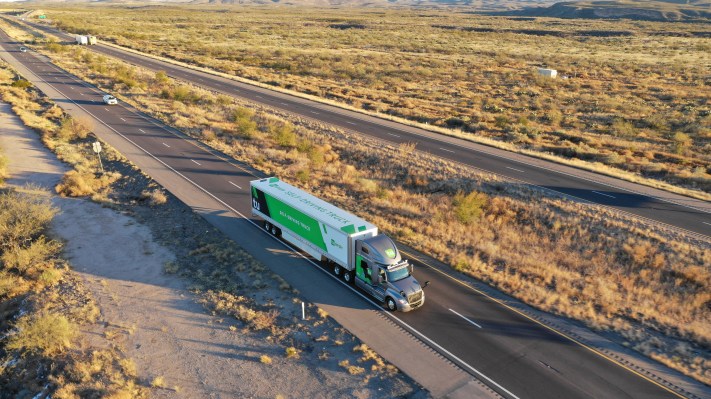
TuSimple has continued to scale its operations. As of March 2020, the company was making about 20 autonomous trips between Arizona and Texas each week with a fleet of more than 40 autonomous trucks. All of the trucks have a human safety operator behind the wheel.